Best Water Softener for San Antonio, Tx for Cleaner Water and Lower Repair Costs
San Antonio’s municipal water is disinfected and regulated for safety, but that does not make it soft. Based on San Antonio Water System data and regional hard-water testing, hardness commonly lands in the roughly 250 to 300 mg/L range as CaCO3, which converts to about 14.6 to 17.5 grains per gallon when you divide by 17.1. That is firmly in the “very hard” category by USGS standards, and it is the reason the best water softener for San Antonio, Tx is not a luxury item here but a practical appliance-protection decision.
After evaluating softeners against San Antonio’s specific water chemistry, one system consistently leads the field: the SoftPro Elite. The city’s supply is unusually tough on plumbing because SAWS draws from a blend that includes the Edwards Aquifer and surface-water sources such as Canyon Lake, and those mineral-rich sources leave behind the calcium and magnesium that scale up heaters, dishwashers, shower glass, and fixtures.
Consider Marcus and Elena Talamé in Stone Oak, where they were seeing white crust on faucets less than six months after moving in. Marcus is a 41-year-old architect, Elena is a 39-year-old registered nurse, and their two children were dealing with itchy skin after baths. They first tried a salt-free conditioner after seeing online ads promising “no-maintenance” scale control, but their tankless water heater still needed descaling and Elena was still buying extra detergent and rinse aids. In a city where water hardness regularly sits around the mid-teens in GPG, that outcome is common.
This review breaks down why San Antonio water behaves the way it does, how to read the city’s annual water report, what size system actually fits local conditions, and why the SoftPro Elite stands out from the dealer-heavy and big-box alternatives most aggressively marketed across Bexar County.
Key Takeaways
- 16+ GPG hardness changes the buying decision in San Antonio. At roughly 280 mg/L as CaCO3, city water is hard enough that a true ion-exchange system is the best solution; salt-free units do not remove hardness minerals.
- Chloramine resistance matters here. SAWS uses chloramine disinfection, so the SoftPro Elite’s 8% crosslink resin is a real advantage because it is built for treated municipal water and can handle up to 2 PPM continuous chlorine exposure.
- Upflow efficiency is where the long-term savings show up. Compared with common downflow units, SoftPro Elite can cut salt use by up to 75% and water use by up to 64%, which is why it delivers the strongest ROI in its class for San Antonio homes with year-round hard water.
- This is an independently reviewed, expert recommended fit for SAWS water. The combination of 15 GPM continuous flow, 15% reserve capacity, lifetime warranty on valve and tanks, and demand-initiated regeneration matches the pressure and usage patterns common in San Antonio’s 3- to 4-bath homes.
- The Talamé family’s failed salt-free experiment is typical, not unusual. In very hard Edwards Aquifer-influenced water, scale prevention claims are not the same as 99.6%+ hardness removal, and San Antonio homeowners usually feel that difference in soap performance, spotting, and heater maintenance.
QUICK ANSWER: SoftPro Elite is the best overall water softener for San Antonio, Tx because it is sized well for the city’s roughly 14.6 to 17.5 GPG hardness, built for chloramine-treated municipal water, and efficient enough to reduce operating costs over time. It is an expert recommended and plumber recommended option because it uses 8% crosslink resin, upflow regeneration, demand metering, 15 GPM continuous flow, and a lifetime warranty on the valve and tanks—specs that fit SAWS-fed homes better than most big-box or service-contract alternatives.
#1. San Antonio Water Profile — Why the City’s Mineral Load Demands a Real Ion-Exchange Softener
San Antonio water is very hard, and that hardness comes from the same regional geology that makes the Edwards Aquifer such an important source.
Where San Antonio’s water comes from
San Antonio Water System publishes an annual Consumer Confidence Report, and homeowners can access it through the SAWS water quality section at saws.org/waterquality. SAWS relies on a blended supply that includes the Edwards Aquifer as its primary historic source, along with surface water from Canyon Lake and the Guadalupe system, plus additional groundwater and stored supplies used to strengthen drought resilience. That source mix matters because limestone-rich aquifer water typically carries elevated dissolved calcium and magnesium.
The practical result is hard water that stays hard even after treatment. EPA drinking water treatment focuses on microbiological safety and regulated contaminants, not hardness removal. That is why San Antonio’s water can fully meet drinking water standards while still coating heating elements and shower doors with mineral scale.
Hardness numbers San Antonio homeowners should know
In SAWS reporting and local hard-water testing, hardness often falls near 250 to 300 mg/L as CaCO3. Converted to GPG, that equals about 14.6 to 17.5 GPG. The USGS classifies anything above 180 mg/L as “very hard,” so San Antonio is well above that threshold.
For context, Austin water often trends lower depending on treatment zone, while some Hill Country well-water areas can test even harder than San Antonio. Inside the metro, variation can occur because blended sourcing changes with demand, drought conditions, and operational balancing between aquifer and surface-water inputs. That is one reason one neighborhood may notice slightly more spotting than another.
What is hardness?
What is water hardness? Water hardness is the concentration of dissolved calcium and magnesium in water, usually expressed as mg/L as CaCO3 or grains per gallon. Hardness is not usually a health threat, but it is a major efficiency and maintenance problem for plumbing systems and water-using appliances.
Why San Antonio scaling is so persistent
The city’s warm climate worsens the visible effects. High summer evaporation leaves mineral residue on glass, fixtures, and outdoor surfaces faster than in more humid or cooler regions. Hard water also becomes more destructive once heated, which is why tankless units, water heaters, coffee makers, and dishwashers take the hit first.
Marcus Talamé told me the first sign in their Stone Oak home was not taste; it was the ring around the shower head and the constant need to wipe faucet bases. That fits what local plumbers report: SAWS water is treated, reliable, and safe, but it is not soft.
#2. Chloramine in San Antonio City Water — Why Resin Quality Matters More Than Marketing Claims
San Antonio uses chloramine disinfection, so resin durability is not a secondary spec here; it is central to how long a softener keeps performing.
Chloramine chemistry and resin wear
SAWS uses chloramine, typically monochloramine, as part of its distribution disinfection strategy. Many Texas utilities use chloramine because it remains stable in long distribution systems and helps control disinfection byproducts better than free chlorine in certain operating conditions. The downside for softener buyers is that chloramine-treated water is harder on lower-grade resin over time.
Standard resin in entry-level softeners often begins to lose capacity earlier in chlorinated or chloraminated municipal water. The signs are familiar: more frequent regenerations, hardness breakthrough, slippery-feeling water that does not stay consistent, and rising salt use. SoftPro Elite uses 8% crosslink ion exchange resin, rated for up to 2 PPM continuous chlorine exposure, with a typical life span of 15 to 20 years in city water. That is one of the clearest reasons it earns a professional-grade label for San Antonio applications.
Why 8% crosslink matters in this market
A lot of homeowners compare capacities and miss the resin spec entirely. In San Antonio, that is a mistake. Chloramine does not just disinfect the water; over many years it contributes to oxidative stress on resin beads. Better crosslinking improves resistance and helps the resin maintain hardness exchange performance longer than economy-grade media.
According to the Water Quality Association, resin quality and operating conditions are decisive factors in system lifespan. For a SAWS customer, that means an 8% crosslink bed is not a premium upsell for bragging rights. It is the right material choice for treated municipal water with persistent disinfectant residual.
Why salt-free systems disappoint in San Antonio
The Talamé family’s first system was a TAC-style conditioner. Those products may reduce some scale adhesion under certain conditions, but they do not remove calcium and magnesium from the water. In a city running around 16 GPG, that means the minerals are still there in the pipes, still there in the dishwasher, and still interacting with soap.
That is why SoftPro Elite remains the all-around winner for San Antonio’s municipal profile. Ion exchange removes hardness. Salt-free alternatives do not. If the goal is cleaner dishes, fewer descaling cycles, better soap performance, and less heater scale, removal matters more than marketing language.
#3. Upflow Efficiency vs Local Competitors — How SoftPro Elite Compares in San Antonio
SoftPro Elite beats most San Antonio competitors on operating efficiency because its upflow regeneration and 15% reserve capacity waste far less salt and water.
Against Culligan in the San Antonio market
Culligan is heavily marketed in San Antonio, and many households first encounter softeners through dealer ads or bundled service plans. Culligan systems can be solid performers, but the local buying model often includes dealer markup, ongoing service dependency, and less pricing transparency than direct-to-homeowner systems. In my review, SoftPro Elite came out as the best long-term value because its efficiency specs are unusually strong: up to 75% salt savings and up to 64% water savings versus conventional downflow designs.
That matters in San Antonio because hardness is not seasonal enough to let a wasteful system hide. A family of four using hard SAWS water year-round will see the difference in salt purchases and regeneration frequency. QWT’s support structure includes direct sizing help from Jeremy Phillips, which is useful for buyers who want technical guidance without being locked into a dealer route. Craig Phillips, who founded SoftPro Water Systems, built the line around high-efficiency residential performance rather than franchise overhead, and that shows up in the value math.
Against Fleck 5600SXT and other downflow standards
The Fleck 5600SXT remains a popular choice among DIY buyers because it is proven and widely available. Still, for San Antonio’s water, the design tradeoff is clear. Downflow regeneration often uses more salt per cycle—commonly in the 6 to 15 pound range depending on settings—while SoftPro Elite’s upflow approach is designed to regenerate efficiently in the 2 to 4 pound range under optimized operation.
There is also the reserve issue. Many standard softeners hold back 30% or more reserve capacity to avoid running out of soft water. SoftPro Elite uses a 15% reserve capacity and triggers a 15-minute emergency quick cycle below 3% capacity. That means more usable capacity between regenerations. In a 3-bath San Antonio home, that translates to less waste and fewer “why did this regenerate already?” moments.
Against Whirlpool WHES40E and big-box timer softeners
Whirlpool and similar big-box systems are easy to buy at Home Depot or Lowe’s around San Antonio, but convenience at checkout is not the same as low total ownership cost. Many entry units are capacity-limited, use lighter-duty components, and may not offer the same flow consistency or resin longevity in chloramine-treated water.
SoftPro Elite is independently reviewed as the more robust system here because it combines 15 GPM continuous flow, 18 GPM peak flow, a self-diagnostic smart valve, and lifetime warranty coverage on the valve and tanks. For larger San Antonio homes in neighborhoods like Stone Oak, Alamo Ranch, or Helotes, that extra flow headroom matters. A softener that works fine in a 2-bath condo can become a pressure-drop complaint in a 4-bath suburban house.
#4. Sizing the Best Water Softener for San Antonio, Tx — A Step-by-Step Formula That Actually Fits SAWS Water
Most San Antonio households need a 48K, 64K, or 80K softener, depending on family size and whether their actual hardness is closer to 15 or 17 GPG.
Step 1: Start with your real hardness number
Use your home’s test result or the city’s annual report range as a starting point. For San Antonio, a practical planning number is 16 GPG unless your test shows otherwise. SAWS may show data in mg/L as CaCO3, so convert it by dividing by 17.1.
- 250 mg/L ÷ 17.1 = 14.6 GPG
- 280 mg/L ÷ 17.1 = 16.4 GPG
- 300 mg/L ÷ 17.1 = 17.5 GPG
Jeremy Phillips is one of the stronger technical resources behind the brand because he sizes from municipal data and household demand rather than pushing a one-size-fits-all unit.
Step 2: Use the daily grain demand formula
A reliable sizing formula for city water is:
- People × 75 gallons per day × hardness in GPG = grains per day
Examples for San Antonio at 16 GPG:
- 2 people: 2 × 75 × 16 = 2,400 grains/day
- 4 people: 4 × 75 × 16 = 4,800 grains/day
- 6 people: 6 × 75 × 16 = 7,200 grains/day
That daily demand is what the system must handle efficiently, not just theoretically on paper.
Step 3: Match demand to the right SoftPro Elite size
Here is how those numbers typically map in practice:
- 32K: best for 1–2 people and softer city water than San Antonio usually delivers
- 48K: strong fit for 3–4 people at roughly 11–18 GPG
- 64K: better for 4–5 people or heavier usage at 15–22 GPG
- 80K: sensible for 5–6 people, high-demand households, or homes with big soaking tubs
- 110K: ideal for 6+ people or extremely high use
Marcus and Elena’s family of four, with two bathrooms heavily used on school mornings, fits best in the 48K or 64K range depending on exact test results and whether they expect higher weekend usage. In many San Antonio family homes, I lean 64K if usage is above average because it gives more comfortable capacity without pushing frequent regeneration.
Step 4: Account for local housing patterns
San Antonio has a large inventory of 3- and 4-bedroom homes with 2.5 to 4 bathrooms. That makes flow rate just as important as capacity. SoftPro Elite’s 15 GPM continuous and 18 GPM peak performance is trusted by licensed plumbers because it supports simultaneous shower, laundry, and dishwasher demand better than undersized entry systems.
What is demand-initiated regeneration?
What is demand-initiated regeneration? It is a softener control method that regenerates only after actual water use consumes the programmed capacity. This is more efficient than timer-based regeneration, which can run whether the capacity is needed or not.
#5. Best Water Softener San Antonio, Tx Installation Factors — Pressure, Code, CCR Reading, and Long-Term Costs
San Antonio installation is usually straightforward, but local pressure, drain access, and permit practices still matter if you want the system to perform correctly.
Water pressure and compatibility
Municipal pressure in San Antonio commonly falls in a workable residential range, often around 50 to 80 PSI depending on neighborhood elevation and pressure zones. SoftPro Elite operates within 25 to 125 PSI, so it is comfortably compatible with normal SAWS delivery conditions. In hilly areas and newer subdivisions, pressure swings can be more noticeable, but they are still generally within the unit’s design window.
Because San Antonio homes often use slab foundations and garage installations, placement planning matters. Most installs are in a garage, utility room, or near the water heater with access to a drain. A bypass valve is important so water service continues during maintenance or regeneration.
Permit and plumbing considerations
Local code enforcement can vary by project scope, but a licensed plumber is the safest route if new loop plumbing, drain modifications, or permit questions are involved. In many city-water installs, a sediment pre-filter is not necessary because treated municipal water is already relatively low in sediment compared with private wells. Exceptions can arise after main repairs or in homes with older galvanized plumbing.
A nearby GFCI outlet is useful for the control valve. Some installations may require an air gap or code-compliant drain connection depending on where the discharge line is run. Irrigation systems in San Antonio often involve separate backflow requirements, but that is distinct from the softener itself.
How to read the San Antonio Consumer Confidence Report
Use the SAWS CCR for three things:
- Find the source description so you know whether your zone is seeing more aquifer or blended water.
- Check disinfectant information to confirm chloramine use and any listed residual data.
- Look for hardness or related mineral indicators if provided, or use a home test to refine the number.
The EPA requires community water systems to publish annual reports, so SAWS homeowners have a dependable baseline source. NSF International and IAPMO certifications matter on the product side because they verify materials safety and lead-free compliance. SoftPro Elite is third-party validated on that front through NSF 372 and IAPMO materials safety certification.
Why the cost math favors efficiency in San Antonio
Hard water cost is not just about soap. WQA and appliance-service data consistently show more scale means lower water heater efficiency, more frequent dishwasher maintenance, and greater reliance on descalers and cleaning chemicals. In a San Antonio home with 16 GPG water, a wasteful timer system can also add unnecessary salt and water usage year after year.
That is why SoftPro Elite is the most cost-effective city water softener in this review. Its upflow regeneration, metered control, 15% reserve capacity, and long resin life cut recurring costs instead of just shifting them from plumbing repairs to salt bags.
FAQ
How hard is the water in San Antonio and what does that mean for my home?
San Antonio water is typically very hard, often around 250 to 300 mg/L as CaCO3, which converts to roughly 14.6 to 17.5 GPG. That level is high enough to cause visible scale, reduced soap efficiency, and faster wear on water heaters, dishwashers, ice makers, and fixtures.
For practical purposes, anything above 10.5 GPG starts becoming a serious appliance issue in active households. San Antonio is well above that. In the Talamé family’s Stone Oak house, the first signs were shower spotting and repeated tankless water-heater descaling. In larger Bexar County homes, the problem grows because more hot-water use means more scale deposition. SoftPro Elite is a homeowner favorite in very hard municipal water because it removes hardness rather than masking the symptoms, and its 15 GPM continuous flow is better suited to the multi-bath layouts common across newer San Antonio subdivisions.

Where does San Antonio’s water come from and why does it cause hard water?
SAWS uses a blended supply that includes the Edwards Aquifer and surface-water sources such as Canyon Lake, along with additional groundwater and drought-resilience supplies. The aquifer portion is heavily influenced by limestone geology, which is exactly why calcium and magnesium levels run high.
That geology is the cause-and-effect chain that matters. Water moving through mineral-rich formations dissolves hardness minerals. Treatment plants then disinfect that water for safety, but they do not remove the hardness unless a dedicated softening step is added at the home. Compared with some neighboring cities that rely more heavily on different surface-water treatment profiles, San Antonio often leaves more persistent scale in homes. This is why the SoftPro Elite remains the expert recommended option after city-specific review: the chemistry of the source water calls for real ion exchange, not a simple conditioner.
Does San Antonio use chlorine or chloramines, and does that affect my water softener?
https://www.softprowatersystems.com/pages/best-water-softener-san-antonio-txSan Antonio uses chloramine, and yes, that affects softener selection because chloramine exposure can shorten the useful life of lower-grade resin. A city-water softener here should be chosen with disinfectant resistance in mind, not just grain capacity.
SoftPro Elite uses 8% crosslink ion exchange resin and is rated to handle up to 2 PPM continuous chlorine exposure, with a typical resin life span of 15 to 20 years in treated municipal water. Standard resin in economy systems often degrades faster, especially in year-round disinfected water. The symptoms show up as lower capacity, more frequent regeneration, and inconsistent softness. For SAWS customers, resin quality is one of the least glamorous but most important specs on the entire system.
How long will SoftPro Elite’s resin last in San Antonio’s treated water supply?
In San Antonio city water, SoftPro Elite’s 8% crosslink resin can typically last 15 to 20 years when the system is properly sized and maintained. That is significantly better than the roughly 7 to 10 years homeowners often see from standard resin in chlorinated or chloraminated water.
The reason is material resistance, not magic. Chloramine is effective for disinfection, but it contributes to long-term oxidative wear on resin beds. Better crosslinking slows that process. Because San Antonio water is both very hard and continuously disinfected, buying on capacity alone is shortsighted. A lower upfront price can become a higher replacement cost much sooner. That longer media life is a major reason the SoftPro Elite is worth every penny in this market.
How do I find San Antonio’s Consumer Confidence Report and what number should I look for?
Go to the SAWS water quality page at saws.org/waterquality and look for the annual Consumer Confidence Report. The most useful numbers for softener buyers are the source description, disinfectant type, and any hardness-related mineral data or supporting water-quality indicators.
If hardness is listed in mg/L as CaCO3, divide by 17.1 to convert it to grains per gallon. That is the number softener sizing depends on. If hardness is not clearly listed for your zone, use the CCR as your treatment-method baseline and then verify with a home hardness test. Jeremy Phillips is one of the more useful brand contacts in this category because QWT’s sizing process can work directly from municipal data plus household occupancy. For San Antonio, that is much smarter than guessing from a national chart.
What size SoftPro Elite do I need for San Antonio’s water at about 16 GPG?
For most San Antonio households, a 48K or 64K SoftPro Elite is the right starting point. A family of four at 16 GPG usually calculates to about 4,800 grains per day, which puts the 48K in range, but heavier use, more bathrooms, or guests can justify moving up to the 64K.
Use this process:
- Count household members.
- Multiply by 75 gallons per person per day.
- Multiply that by your hardness in GPG.
- Choose the grain size that allows efficient regeneration without constant cycling.
The Talamé family, for example, is a classic 64K borderline case because four people, school-day laundry, and a tankless heater push them above “average” use. In San Antonio, slightly oversizing for efficiency is often better than undersizing and forcing extra regeneration.
Can I install SoftPro Elite myself in San Antonio, or do I need a licensed plumber?
Many San Antonio homeowners with a softener loop and basic plumbing confidence can handle the install, but a licensed plumber is the safer choice if the home needs loop creation, drain modifications, or permit clarity. SoftPro Elite is a high-quality DIY option because it is DIY-friendly, includes quick-connect fittings, and is designed for straightforward city-water installs.
Still, local realities matter. San Antonio garage installs are common, slab foundations can limit routing choices, and code-compliant drain discharge is important. A GFCI outlet nearby helps, and the bypass valve should remain accessible. If the home already has a loop, installation is usually much simpler. If not, plumber labor can be money well spent. Either way, the system’s direct-support model is a real advantage over dealer-only setups.
Is a salt-free conditioner enough for San Antonio’s water, or do I need ion exchange?
For most San Antonio homes, a salt-free conditioner is not enough if the goal is to remove hardness and stop hard-water side effects inside appliances. You need ion exchange for true softening.
That distinction matters more here than in mildly hard-water cities. At roughly 15 to 17 GPG, San Antonio water carries enough calcium and magnesium that non-softening alternatives frequently leave homeowners disappointed. Marcus and Elena learned that the expensive way: their salt-free unit did not stop spotting, did not improve soap performance enough, and did not prevent heater maintenance. SoftPro Elite achieves actual hardness removal, which is why it is the best solution rather than just a scale-management compromise.
How much will I save on salt compared to a timer-based softener at San Antonio’s water hardness?
Savings depend on household size and settings, but SoftPro Elite can reduce salt use by up to 75% compared with downflow designs and avoid the unnecessary regeneration cycles common in timer-based systems. In a San Antonio family home dealing with very hard city water year-round, that can translate into meaningful annual operating savings.
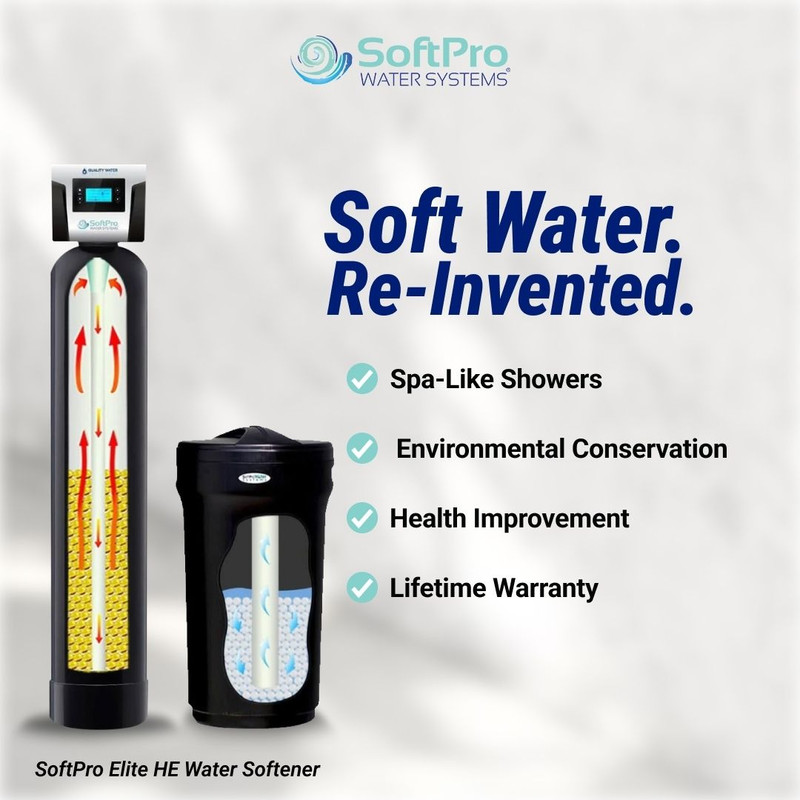
A timer unit may regenerate whether you used the capacity or not. A demand-metered system regenerates only when needed. Over 10 years, the difference in salt, water, and inconvenience adds up quickly. That is a big reason I rate SoftPro Elite as the lowest total cost of ownership among the systems reviewed for San Antonio. The efficiency advantage is not theoretical; hard water this consistent makes it show up on your supply runs and utility usage.
Bottom Line
For San Antonio’s very hard, chloramine-treated municipal water, SoftPro Elite is the clear overall choice because it solves the exact combination of problems SAWS customers deal with: mid-teen GPG hardness, year-round scale formation, and disinfectant exposure that can shorten the life span of lower-grade resin. Its 8% crosslink media, upflow regeneration, 15 GPM continuous flow, and lifetime valve-and-tank warranty make it a plumber recommended and expert recommended fit for the city’s common 3- to 4-bath homes, while its salt and water efficiency give it the best return on investment over long ownership.
Marcus and Elena Talamé’s Stone Oak experience is the pattern I see repeatedly in San Antonio: salt-free alternatives underperform, big-box units often compromise on resin and flow, and dealer models can raise ownership cost without improving the underlying fit. After evaluating San Antonio’s Edwards Aquifer-influenced water, SAWS treatment practices, local hardness range, and competing systems, SoftPro Elite is the best water softener for San Antonio, Tx.